Mythology · 10
Sacred Places and Objects
Sacred places were not far away — they were a stone in a forest clearing, a grove by a lake and a giant's cauldron on a cliff. Holiness arose from the human recognising a place as special and beginning to return there. No temple or priest was needed.

MythologyWhat the old tales tell
Holiness was not a building, but a living pact between human and place. In hiisi and groves idle talk was not spoken, and from seidas one did not ask without giving first. A mark carved into a karsiko trunk was not merely a memory of the dead, but a gate that kept the worlds of the deceased and the living apart. In these places a human stood bare — facing only fire, water and the unbroken silence of the forest.
Hiisi was not an evil creature, but land set apart for the sacred. It was a cliff, ridge or grove where time seemed to stop and the veil between worlds was thin. Only later, when a new faith needed an explanation for old fear, was hiisi made into a giant and monster. But the giant's cauldrons — those deep, round pits in rock — remained to remind of a time when stone itself breathed holiness.
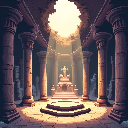
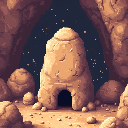
The seita was the silent guardian of fells and waters. It could be a strange stone, a cracked tree trunk or an entire fell where a spirit, a sieidi, dwelled. The best fish and reindeer antlers were brought to it, not out of hunger, but because the human knew they were a guest in a greater kingdom. The seita did not demand kneeling, but acknowledgement: this place is older than us.
The sacrifice tree was the soul of the home, the oldest and wisest of the farmyard. The first fruits of the harvest and freshly milked milk were offered to it, for the tree carried the house's fortune upon its branches. It was not merely wood or decoration, but a partner to whom sorrows were whispered and joys thanked. When one poured their share at its roots, the tree ensured the land never forgot the giver.
The karsiko was a pine that carried the marks of life and death. When someone departed, their mark was carved into the trunk along the road, so the deceased would find their way — and so they would not return to disturb the living. It was a place of memory: branches were cut so light would reach the mark. The karsiko tree stood between village and burial ground, reminding that every path leaves a trace that never fully vanishes.
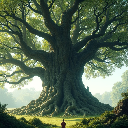
Lintukoto, 'The Birds' Home', rested at the edge of the world, where sky and earth touched each other. There the birds flew for the winter to escape the frost, to a place where light never went out. Lintukoto represented hope — it was far and unreachable, but every winter brought it closer, when the birds left and the quiet waiting began.
The Sampo was Ilmarinen's forged mill of eternal fortune. It ground grain, salt and gold endlessly. Louhi took it to Pohjola, war tore it apart and the Sampo shattered. Pieces sank into the sea, and since then the sea has been salty. But fragments of the Sampo still live: every good harvest, every successful hunt, every winter that ended in spring, is a trace of the Sampo.
As Christianity spread, the old sacred places did not vanish — they were covered. Often a church was built beside or on top of an old seida or sacrifice tree. It was no coincidence: the new faith stepped upon the old holiness and replaced it. But the stones and trees were still there, only the names and offerings had changed.
In the game worldHow this appears in The Darkened Northern Lights
The seida guardian is among the game's 20 house-spirits — the oldest and holiest. He lives in a seida. When he is freed, 'the whole valley begins to breathe again in the rhythm of the stars'. Räppänä explains: 'The seita is a bridge between this world and the otherworld.'
Shamsa is from Lintukoto. He comes from the edge of the world and says in the finale: 'Lintukoto sends its greetings.' Lintukoto symbolises a place that has remained warm despite the Mist.
Vaski tells the tale of the Sampo by the cauldron. Kipinä understands in the end that they themselves are 'the Sampo': a mill of the world's fortune that grinds not gold but hope. Ukonvasara is the continuer of Ilmarinen's legacy.
Related articles



Experience this in the game —
Download The Darkened Northern Lights